Why Strategic Media Buying Still Matters in a Digital-First World
How Digital Advertising Has Changed Consumer Attention
Great advertising isn’t just about the message. It’s about placing that message in front of the right audience at the right time.
As consumers split their attention across streaming platforms, social media, podcasts, websites, television, and more, reaching the right audience has become more complex than ever. At the same time, evolving technologies and AI-driven search are continuing to reshape how brands connect with audiences online.
In fact, the average consumer is exposed to thousands of ads every day, making strategic placement increasingly important. In many cases, audiences interact with multiple platforms before taking action, which is why consistent messaging across channels are important. Even as advertising channels continue to evolve, the core goal remains the same: making sure campaigns appear in the places where they’re most likely to perform.
Media Buying Strategy Is More Than Just Running Ads
Media buying involves planning, purchasing, and managing advertising placements across channels. But effective media buying goes far beyond simply launching ads.
Strong media buying helps brands:
- reach the right audiences
- improve campaign efficiency
- create more consistent visibility
- support long-term campaign performance
A strong media buying or paid media strategy considers audience behavior, campaign timing, budget allocation, placement opportunities, and overall campaign goals.
Even the strongest creative can underperform if it’s shown to the wrong audience, at the wrong time, or on the wrong channel.
Successful campaigns rely on more than visibility alone. Strong creative, strategic placements, and optimized user experiences all contribute to stronger campaign performance. Reaching the right people in the right environment is what turns advertising into meaningful results.
Why Cross-Channel Advertising Campaigns Perform Better
Today’s audiences don’t interact with brands in just one place. Someone might hear a radio ad during their commute, see a digital display ad later that day, and eventually convert after seeing a social media campaign or streaming commercial.
Because of this, cross-channel marketing strategies often create stronger brand recognition and more consistent audience engagement. Combining traditional media with strong digital marketing strategies allows campaigns to reach audiences across multiple touchpoints instead of relying on a single platform to do all the work.
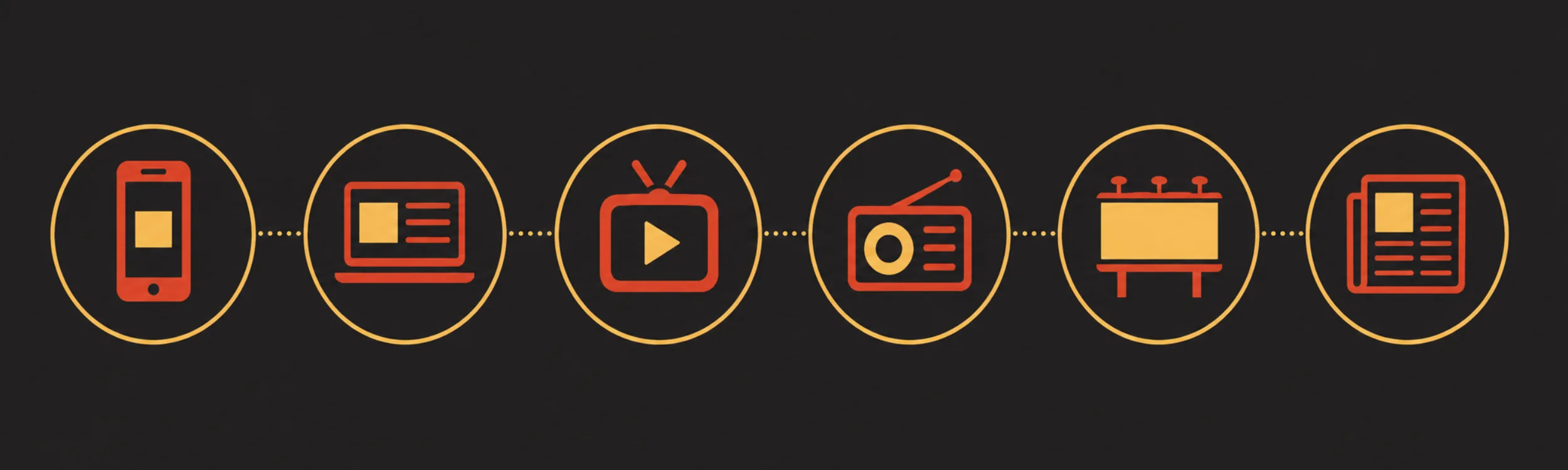
From television and radio to digital advertising, print, and out-of-home placements, each channel plays a different role in supporting campaign performance.
Why Strategic Media Buying Still Matters
Strong media buying helps brands maximize visibility while using budgets more efficiently. Strategic placements can improve reach, reduce wasted spend, and create campaigns that perform more consistently over time.
Paid search delivers immediate results, but only as long as your budget allows. Long-term strategies like organic search visibility help brands continue driving traffic beyond individual campaigns.
As advertising continues to evolve, media buying remains one of the most important parts of a successful marketing strategy. The platforms may change, but understanding where, when, and how to reach audiences continues to make the difference between campaigns that blend in and campaigns that perform.
Looking to build a more strategic media buying approach?
Noisy Trumpet helps brands connect with the right audiences through strategic media buying, cross-channel advertising, and data-driven campaign optimization designed to maximize performance.